There’s a version of sales most SME owners have experienced and quietly resented. The connection request that arrives with a pitch in the same breath. The DM that opens with “I help businesses like yours…” The follow-up sequence that arrives three days later regardless of whether you responded.
It works on volume. It burns trust at scale.
The irony is that the highest-converting sales approach has been known for decades. Consultative selling — understand first, recommend second, close only when invited — consistently outperforms transactional outreach in B2B contexts. The problem was always economics. Running 500 genuine relationship conversations simultaneously requires either a large sales team or an extraordinary human. Neither is accessible to most SME founders.
That equation has changed. The businesses that build relationship-first infrastructure now will have a meaningful advantage over those still waiting for the algorithm to deliver them an audience.
The mechanic that actually works
Relationship-first outreach follows a simple logic. You identify the right people, make genuine contact, demonstrate expertise without pushing, and stay present until the moment of need arrives. When it does, you’re already trusted.
The practical sequence looks like this:
- Identify target profiles based on fit, not just volume
- Make contact with something that demonstrates you’ve actually paid attention
- Offer value with no strings — a resource, an insight, an introduction
- Maintain presence through genuine engagement — comments, reactions, occasional check-ins
- Let the commercial conversation happen when they initiate it
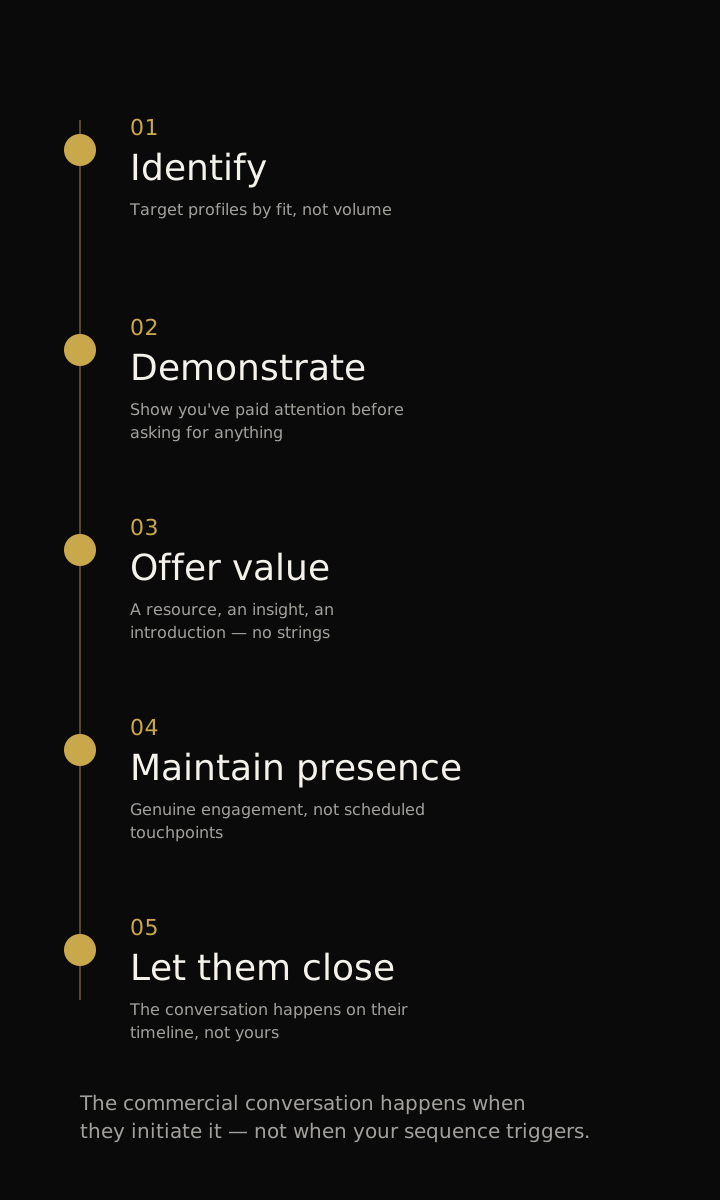
The last point is the one most sales processes get wrong. Closing on your timeline, not theirs, is the fastest way to lose a warm relationship. When someone asks for your advice or your price unprompted, the conversion rate is incomparably higher than any sequence-triggered close.
Why demonstration beats declaration
Most professionals claim expertise. Few demonstrate it publicly before asking for anything in return.
Commenting thoughtfully on a prospect’s post — adding something genuinely useful rather than performative agreement — does more for trust than three follow-up messages. It’s visible, it’s indexed, and it arrives before any direct contact happens. By the time a connection request lands, the person receiving it may have already seen your thinking twice in their feed.
That ambient presence is what makes the eventual conversation feel warm rather than cold.
The content connection
None of this works without a genuine knowledge base behind it. The quality of every conversation — the questions asked, the observations made, the advice given — is a direct function of how deeply you understand your domain and your client’s world.
This is why content and sales are not separate functions. Every blog post, every market insight synthesised, every principle documented from experience feeds directly into the quality of every conversation that follows. Richer knowledge means sharper questions. Sharper questions mean better conversations. Better conversations mean more people who ask for the close on their own terms.
The content isn’t marketing collateral. It’s the brain behind every relationship.
What this means at scale
A senior consultant or operator running this model manually can maintain perhaps 20 meaningful relationships simultaneously. That’s the economic ceiling that has historically made consultative selling viable only for high-ticket offers run by senior operators with deep domain expertise — not for marketing teams running campaigns.
The ceiling has moved.
AI-assisted relationship management — monitoring conversations, surfacing the right moment to re-engage, ensuring no warm contact goes cold through neglect — means the same model now runs across hundreds of relationships in parallel. The human stays in the loop for every commercial decision. The system handles continuity.
The result is a growth model that doesn’t depend on platform algorithms, doesn’t require an advertising budget, and compounds over time as the relationship network deepens.
This is why “AI sales tools” sold to marketing teams keep missing the mark. They optimise for volume on top of the broken sequence model — more cadences, more touches, more automation against the same shallow first-touch. The relationship-first model isn’t a marketing function dressed up with AI. It’s an operator’s growth strategy that’s only now economically scalable.
The businesses that build this infrastructure now — genuine expertise, consistent presence, systematic relationship management — will compound an advantage that’s hard to catch up with later. Algorithms shift. Platforms change their terms. Relationships, properly tended, only get more valuable over time.