Here’s something we didn’t expect to find when we started tracking conversation patterns.
Over the last three months, the warmest, fastest-converting business conversations we’ve had came from one specific channel. Not cold LinkedIn. Not paid ads. Not webinar funnels. Not AI-assisted outreach — and we build AI outreach systems for a living.
The channel: structured in-person network meetings. Specifically, weekly groups like BNI. Three discovery meetings in the last fortnight alone. Advocates emerging from members who’d never met us before. A conversion rate that’s making us rethink our channel mix.
If you’re an SME owner watching your digital outreach get harder while real conversations keep working — this isn’t an accident. There’s a pattern underneath, and it matters.
The signal we kept seeing
We didn’t go looking for this. We track conversations across every channel — cold LinkedIn, content-driven inbound, paid ads, referrals, networking. The pattern just kept showing up in the data.
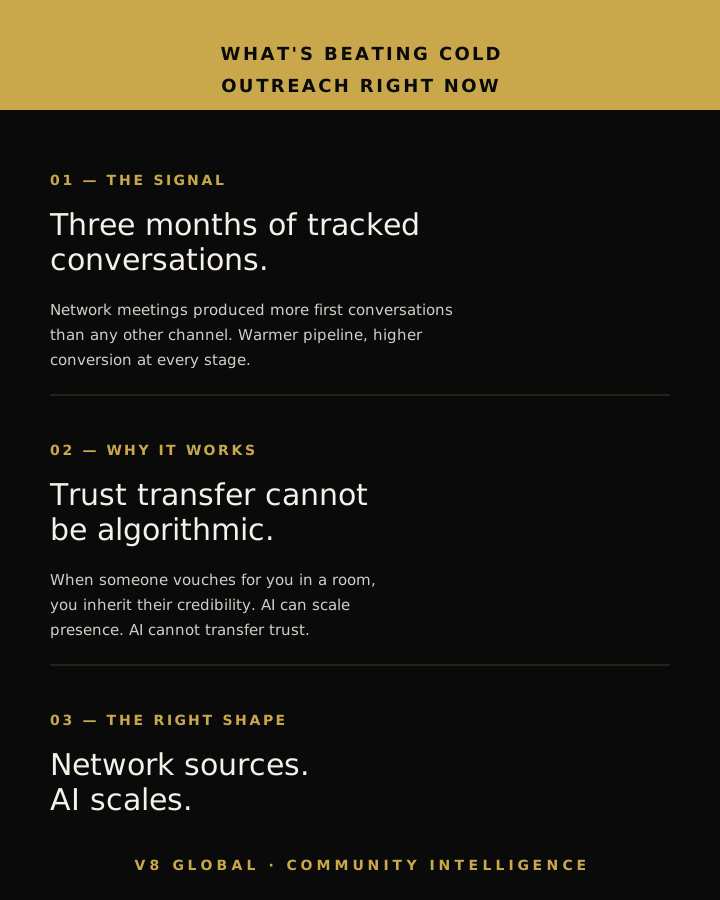
Network meetings produced more first conversations than any other channel. Of those, a higher proportion converted into discovery calls. Of those, a higher proportion converted into proposals. The funnel doesn’t just start warmer — it stays warmer.
This wasn’t a one-off. Three months of consistent signal. And the warmest pipeline came from someone we hadn’t even pitched to — a BNI member who’d heard the V8 story and was now bringing prospects to us, unprompted.
Why digital outreach is getting harder
Inbox saturation isn’t new. What’s new is the speed at which AI-assisted outreach has scaled the noise.
Every SME owner’s inbox now receives dozens of perfectly-crafted, hyper-personalised cold messages every week. They reference your recent LinkedIn post. They mention your company by name. They sound exactly like a thoughtful human reaching out. They’re written by AI.
Buyers can spot this now. The tools that made outreach efficient also made it ignorable. The personalisation that used to feel rare and intentional now feels manufactured. And as the volume goes up, the response rates collapse.
This is structural, not temporary. It will get worse before it gets better.
What network rooms do that algorithms can’t
Trust transfer.
When a BNI member references you to their network, you inherit their credibility. The introduction isn’t “have you heard of V8 Global” — it’s “my friend runs this business, and she’s helped three of my contacts already.” That’s not a sales conversation. That’s a vouch.
AI can amplify content reach. AI can personalise outreach at scale. AI cannot transfer trust. The fundamental unit of B2B trust is still “someone I know vouches for them.” That has not changed. It probably won’t change.
Networking rooms are designed around this exact mechanism. Structured weekly groups like BNI, curated executive communities, masterminds, industry chapters — they all create the conditions where members get to know each other well enough to vouch credibly. The conversion advantage isn’t a bug or a fluke. It’s the design.
The contrarian framing — AI doesn’t replace networking. It amplifies it.
This is the part most AI vendors get wrong.
The pitch from every AI sales tool right now is some variation of “replace your sales reps with AI agents.” The implication is that human networking is obsolete. The data we’re seeing says the opposite.
Where AI actually adds value is inside relationships you already have. AI can produce on-brand content for the network you’re already in. AI can keep you visible to the people who already trust you. AI can handle the operational follow-through after a warm introduction — proposal drafting, calendar coordination, ongoing engagement — so you can focus on the conversations that matter.
The right shape is not “AI cold outreach to strangers”. It’s “AI-produced thought leadership for warm networks who already trust me.”
The networking room sources the relationship. AI scales the presence within it.
Why this matters more for SMEs specifically
Big enterprises have brand equity. Their cold outreach works partly because the prospect already knows the name. SMEs don’t have that moat, and digital outreach is increasingly difficult to break through.
Network rooms give SMEs a credibility short-cut that no algorithm can replicate. Two hours a week in a structured group, consistently, builds a network of advocates who can introduce you to a hundred prospects you’d never reach cold. The economics are extraordinary if you’re patient enough to let it compound.
This is the channel SMEs should be doubling down on right now — not abandoning for “more efficient” digital plays.
What we built around this
V8 Nexus is a curated executive community for London business leaders and senior professionals who want intelligent connections rather than transactional ones. It’s smaller than a BNI chapter, more strategic in composition, and structured for the kind of trust transfer that produces business — not just business cards.
If you’re an SME owner or senior professional who’s been working hard on digital outreach with diminishing returns, the most underrated move you can make this quarter is to be in the right room consistently. Pick one. Show up every week. Stop trying to scale what doesn’t scale, and start compounding what does.
The conversations that build a business still happen between humans.