Have you noticed a new kind of stress creeping into your workday?
It’s the feeling when you glance at your AI usage stats and realise you’ve burned through more than you planned. Or the odd guilt of closing your laptop while your AI tools sit idle — as if something should be running while you sleep. Or the background hum of wondering whether your competitors are doing more with AI than you are, even though you don’t know what “more” actually looks like.
This has a name now: token anxiety.
It’s a very modern, very real form of workplace stress. And it’s worth taking seriously — not because the anxiety is justified, but because of what it reveals about how most of us are currently relating to AI tools.
What’s actually going on
Token anxiety is a symptom of a specific relationship with AI: one where you are managing the tool, rather than the tool working for you.
When you’re anxious about usage limits, output volume, or whether you’re getting enough from your AI investment, it usually means the AI is still sitting in the “tool I operate” category in your mind. Like a piece of software you need to use correctly to get value from.
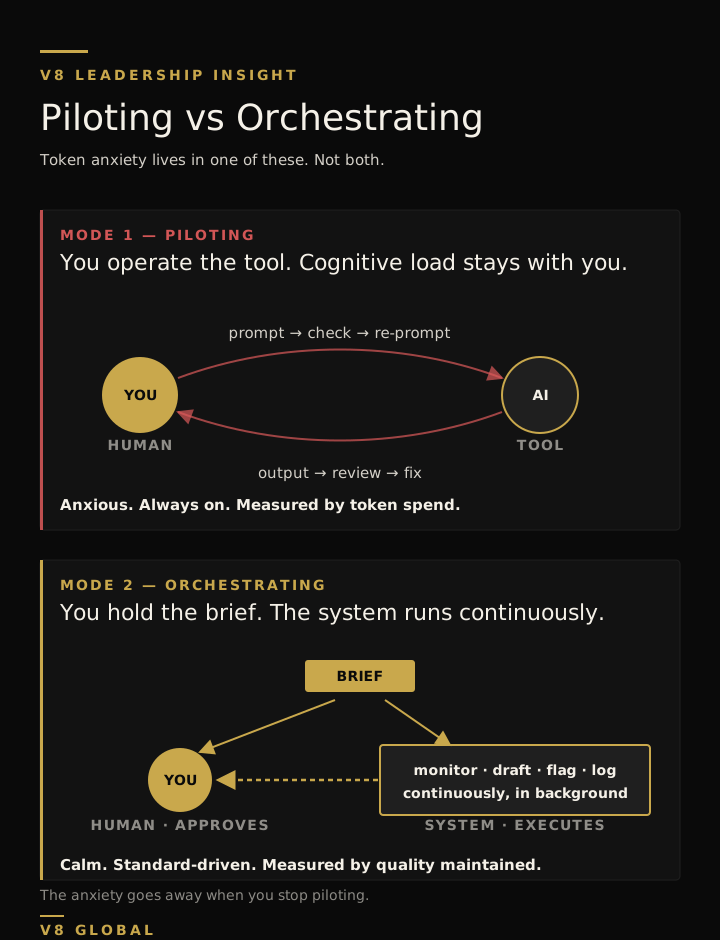
That framing creates a particular kind of exhaustion. You’re responsible for prompting it well, feeding it the right inputs, checking the outputs, deciding what to do next. The cognitive load stays with you. The AI handles execution, but you’re running the project management.
It’s faster than doing it alone. But it’s not the shift people expected when they first heard about AI-powered work.
The deeper problem: quantity over quality
There’s something else worth naming here.
When we’re anxious about whether we’re using AI enough, we start optimising for volume. More posts. More content. More output. The metric becomes “how much did we produce” rather than “how good was it.”
And this is where token anxiety and output drift collide.
If round one of your AI-assisted content was thoughtful and well-briefed, but rounds two through ten were produced in a rush to justify the tool cost, you’re not scaling quality. You’re scaling mediocrity, faster.
The businesses that will build lasting reputations with AI-assisted work aren’t the ones producing the most. They’re the ones maintaining the standard across the volume. Those are very different challenges.
What the shift looks like
The antidote to token anxiety isn’t using AI less. It’s changing what you’re asking AI to do — and how you measure whether it’s working.
A few things worth considering:
- Stop measuring AI value by output volume. The metric should be quality maintained, time reclaimed, or decisions improved — not posts per week.
- Build AI into your process at the system level, not the task level. When AI is embedded in how work flows — monitoring, drafting, flagging, logging — you stop thinking about whether you’re using it enough. It’s just running.
- Reserve your own attention for decisions and standards, not execution. The human job in an AI-assisted workflow is to hold the brief, maintain the standard, and make the calls that require judgment. Not to prompt and check and prompt again.
The anxiety goes away when you stop piloting and start orchestrating.
If you find yourself watching your token count creep up with a vague sense of dread, that’s not a productivity problem. It’s a signal that the workflow needs redesigning, not that you need to use the tool more.
The question isn’t whether your AI is working hard enough. It’s whether the system you’ve built around it is.
Gina Cheng is V8 Nexus Founder & President and a marketing strategist at V8 Global. Leadership Insight posts examine the structural shifts that change how commercial work gets done.