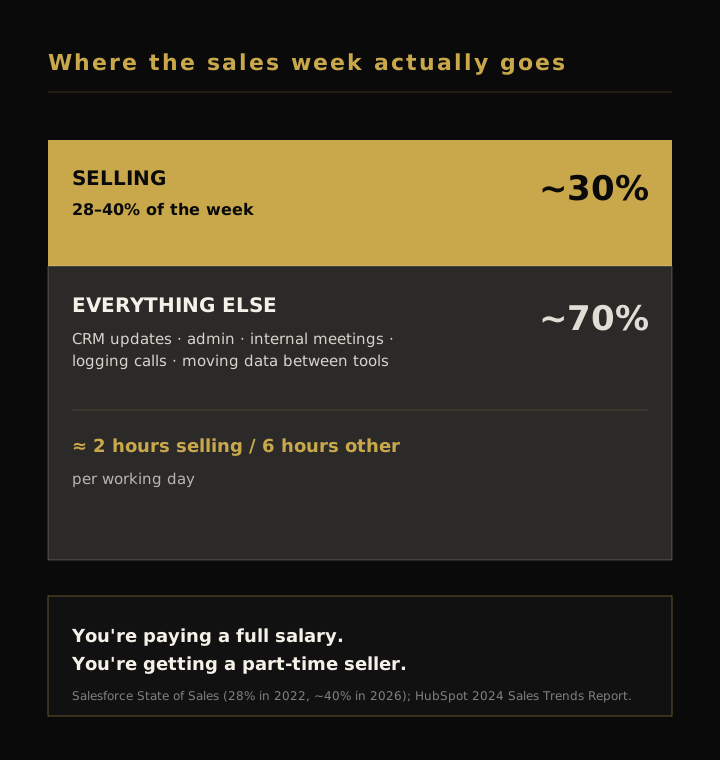
You hired a salesperson to sell. According to HubSpot’s 2024 Sales Trends Report, the average rep spends about two hours a day actually selling. One more hour goes to admin. The rest of the day goes somewhere else entirely.
That’s not a criticism of your team. It’s a description of the system they’re working inside — and it’s costing you more than the wasted hours suggest.
Where the day actually goes
The two-hour figure isn’t an outlier. Salesforce’s State of Sales research has put selling time as low as 28% of the working week; even its improved 2026 figure sits around 40%. Either way, the majority of a rep’s paid time goes to something other than selling — CRM updates, logging calls, chasing internal approvals, hunting for the right deck, moving data between tools that don’t talk to each other.
None of that is optional work. The records genuinely need updating. The data genuinely needs moving. The problem isn’t that reps are doing unnecessary tasks — it’s that a person you’re paying to sell is spending most of their week as an administrator.
And it compounds. Gartner found that sellers overwhelmed by the number of tools they have to operate are 45% less likely to hit quota — and half of sellers say they’re overwhelmed by exactly that. The admin isn’t just eating time. The tool-sprawl that creates the admin is itself dragging down the outcome you hired for.
The second leak: the follow-up that never happens
Here’s the part most owners don’t see, because it’s defined by absence.
Sales research widely holds that most B2B deals need five or more follow-up touches before they close. That’s not controversial — persistence is where deals are won. But follow-up is precisely the kind of work that dies first under admin load. It requires logging the last interaction, drafting a message that references real context, and timing the send. When a rep is already spending most of the week on admin, the fifth follow-up is the easiest thing to let slide.
So it slides. Not through laziness — through a structural gap in attention. The deals that go quiet aren’t cold leads who said no. They’re warm contacts who simply weren’t contacted again, because the system made consistent follow-up harder than it should be.
The two leaks are the same leak. Reps don’t follow up because they’re buried in admin. They’re buried in admin because the system requires it. Fix the system, and both move.
What this costs, roughly
Put illustrative numbers on it. A five-person team, each rep fully loaded at £40,000 — £200,000 of payroll. If selling is 30% of the week, then £140,000 of that is being spent on time that isn’t selling. That’s not a claim that the £140,000 is wasted — some of that admin is real and necessary. It’s a claim that most of it is automatable, and that the portion going to dropped follow-ups is pure recoverable revenue walking out the door.
(These are illustrative figures to show the shape of the cost, not a measured result for any specific team.)
The systems fix
The admin exists because the tasks are real — so the answer isn’t to tell reps to try harder, or to skip the CRM. It’s to let a system carry the parts that don’t need a human:
- Inbound email captured, classified, and filed to the CRM without manual entry
- Contacts flagged when they’ve gone quiet, with a follow-up drafted and ready for one-tap approval
- Commitments and deadlines extracted from conversations and tracked
- Contacts who’ve clearly declined parked automatically, so no one chases a closed door
When the system carries that, reps don’t magically get more hours — they get the right hours back. The time currently going to CRM upkeep goes to the fifth and sixth follow-up that actually closes.
Two questions worth asking
If you run a lean sales team — three to ten people — two numbers will tell you more about your revenue leak than your pipeline report will:
- What share of your CRM is updated in real time, versus logged in batches at week’s end, or not at all?
- What’s your average follow-up count per prospect before a deal closes or gets archived?
If the first is low and the second is under five, you’re not looking at a people problem. You’re looking at a system that’s quietly losing deals your team already earned.