Adapted from Gina’s feature in the September–October 2026 issue of Hongkongers Magazine, with the ONS labour market figures published on 15 September 2026.
I keep having the same conversation lately, and it comes in two versions.
The first one happens at Nexus evenings, over coffee after a networking breakfast, in DMs that start with “random question, but…”. Someone leans in, half-joking: my job feels less stable than it used to, I’ve got things I could sell or teach or consult on, so what if I started something small on the side?
The second version is quieter, and it usually comes from someone who’s already doing the first. The side thing is working. Clients are coming back. And they’re wondering: what if this became the main thing?
Neither is framed as a plan. They’re both framed as a “what if.” I think they deserve a proper answer, because right now more people are asking them than I’ve ever seen.
The short version:
- The pressure is real: redundancy warnings are at their highest since 2020, payrolls are shrinking and vacancies are at a decade-plus low
- Side hustles are already normal in the UK. The more interesting question is which ones grow into a one-person business
- Running a business on your own used to mean burning out or hiring before you could afford to. AI has eased that trade-off
- The people who make the jump keep the judgement calls for themselves and hand the repetitive admin to systems
The pressure is real, not imagined
If you’ve felt the ground shift a bit this year, you’re not imagining it.
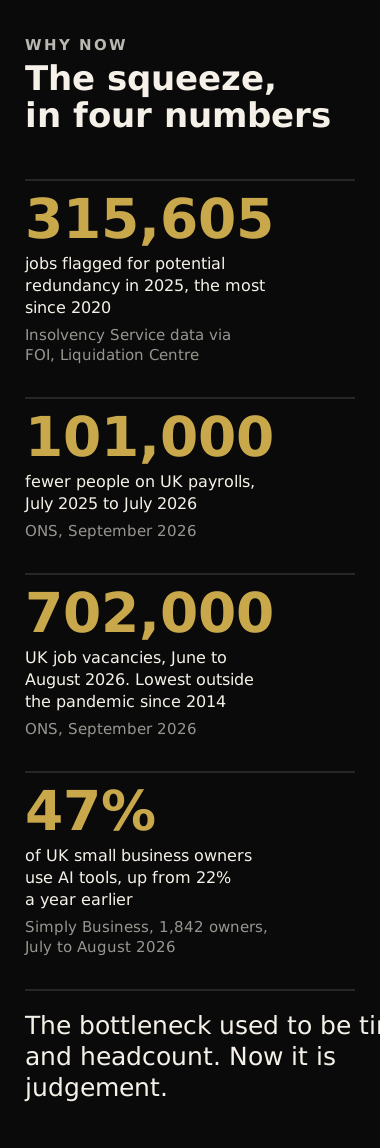
In 2025, 315,605 jobs were flagged for potential redundancy, the highest since 2020 and roughly 45% more than in 2021, according to Insolvency Service data obtained by Liquidation Centre through a Freedom of Information request. Those are warnings employers file before cutting roles, not confirmed job losses, but they tend to arrive weeks or months ahead of the real thing.
The official figures point the same way. The number of people on UK payrolls fell by 101,000 between July 2025 and July 2026, and job vacancies dropped to 702,000 in June to August. Outside the pandemic, the UK hasn’t had that few vacancies since 2014 (ONS, Labour market overview, September 2026).
None of that means the sky is falling. It means the single-employer, single-income model is under more strain than it was three or four years ago, and a lot of people, Hongkongers in the UK very much included, are quietly working out what their own thing would look like.
Side hustles are already normal
Here’s what surprises people: you wouldn’t be early.
Depending on whose survey you read, somewhere between a quarter and nearly half of UK adults have a side hustle this year. The range is that wide because each survey defines a side hustle differently, from occasional resale to a proper second client base. Either way, earning outside your main job is no longer unusual.
Most of those side hustles stay small, and that’s fine. Plenty of people want some extra income and nothing more. But some of them start behaving like a business before their owner has decided to treat them like one. That’s the moment worth paying attention to.
The maths of running it on your own has changed
This is the part that’s actually new.
A few years ago, turning a side project into a real business meant one of two things: working every evening until you burned out, or hiring help before the numbers justified it. That trade-off hasn’t disappeared, but it’s much less brutal than it was.
In my own client and Nexus conversations, the people who manage the jump, without losing their evenings entirely, are almost always the ones who’ve handed the repetitive admin to some form of automation. The follow-ups, the scheduling, the first-draft outreach. They keep their own time for the judgement calls: which client to take, which pitch to send, which relationship to look after personally.
The wider numbers are moving the same way. 47% of UK small business owners now use AI tools, up from 22% in 2025, according to a Simply Business survey of 1,842 owners carried out between 30 July and 7 August 2026. That’s one survey, and adoption figures swing a lot depending on how the question is asked, but the direction is hard to argue with.
Put plainly: the bottleneck for a one-person business used to be time and headcount. For a growing number of solo operators, it’s neither of those anymore. It’s judgement, and judgement is the one thing you can’t outsource anyway.
Signs your side hustle is becoming a business
If you’re wondering whether your side project is ready to be treated as a one-person business, these are the signals I’d look for:
- Someone pays for what you do on its own merits, and comes back, rather than buying it as a favour
- You can name your next three customers, not just your first three
- Work is arriving through referrals you didn’t chase
- The admin around the work (chasing, scheduling, invoicing, following up) is starting to eat more of your evenings than the work itself
- You’d rather grow it steadily and for real than wait for a perfect, fully-formed plan
That fourth one matters more than it looks. When admin starts crowding out the work, it’s usually not a sign you need more hours. It’s a sign you need systems.
If most of that list sounds like you, the next question isn’t “should I do this.” It’s “who’s going to help me with the parts I can’t do alone.”
Where a room and a system both earn their place
This is where I’ll be direct about what V8 actually offers, because I’d rather you know exactly what each part does than have it sound like one vague pitch.
V8 Nexus is the room. It’s a community of founders, consultants and operators, many of them Hongkongers who’ve made exactly this transition. Your first client, your first collaborator, or the first honest gut-check on whether your side project is really a business tends to come from someone you’ve actually met, not a cold pitch into the void. Running a one-person business is far less lonely when you’re not building your network from zero at the same time.
Axia is the system. It takes on the repetitive sales and marketing legwork that grows with a business: following up, keeping a pipeline moving, drafting the first pass of outreach. That’s what lets one person run something that would otherwise need a small team. Every commercial action still goes through a human approval gate before it goes out. It’s not designed to run your business without you. It’s designed to give you back the hours you’d otherwise spend on the parts of the job that were never the valuable part.
Neither one replaces the work of deciding what you’re building. Both exist to make the unglamorous parts of building it lighter.
The honest bit
A one-person business isn’t a shortcut, and it isn’t risk-free. You still have to find a real problem, price your work properly and stand behind what you deliver. No system and no community does that for you.
Most of the people I talk to don’t leap, either. They let the side project prove itself first, and make the move when the numbers say so rather than when the mood strikes. That’s a sensible way to do it. The difference now is that the step from side hustle to your own business is smaller than it used to be, and you don’t have to take it alone.
If you’re sitting on either version of the “what if,” I’d genuinely rather you come and say it out loud at our next members’ evening than keep turning it over on your own. That’s exactly the conversation the room exists for.