I hear the same sentence at almost every event I run.
“I’m just not a salesperson.”
It comes from people who are extremely good at what they do. Consultants with twenty years of judgement. Accountants whose clients would follow them anywhere. Solicitors people trust with the worst week of their lives. And they say it apologetically, like they’re admitting to a flaw.
They’re not bad at selling. They’re doing a version of it that was never going to suit them.
There are two motions everyone knows, and one nobody names
Ask most people how business development works and you’ll get one of two answers.
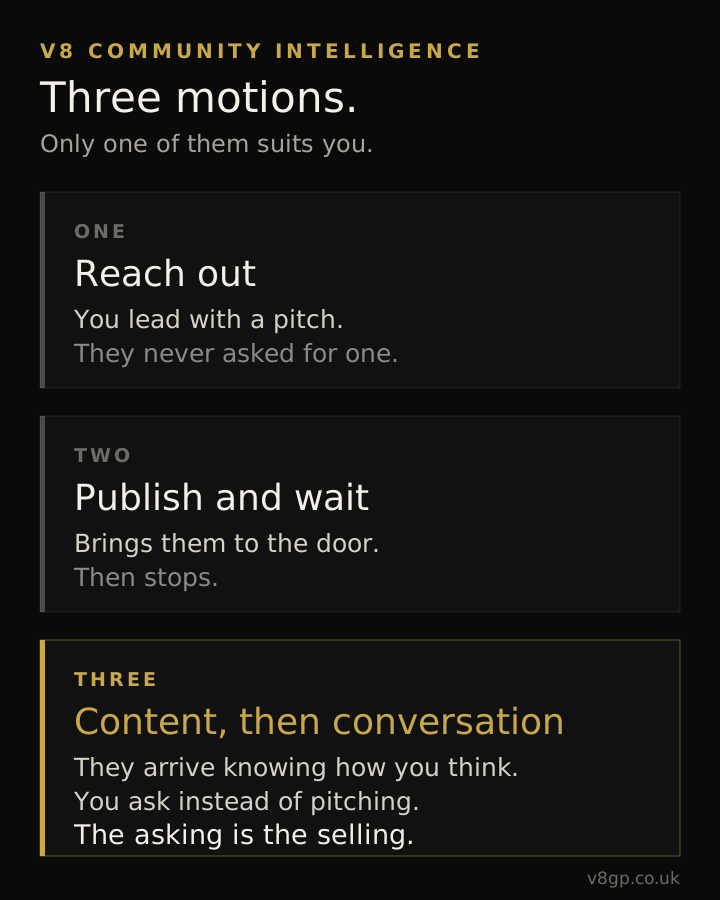
Reach out. Build a list, send the message, follow the sequence. If it isn’t working, send more. This is the version most people picture when they hear “sales,” and it’s the version that makes thoughtful people wince — because it asks you to lead with a pitch to someone who never asked for one.
Or publish and wait. Put good things out, be visible, hope the right person finds you. Kinder, and genuinely better for reputation. But it’s passive, and it stays passive. The content brings someone to your door and then stops. The actual selling still has to start from nothing on the call.
Most people pick one, feel uncomfortable, and conclude the discomfort is a personal failing.
There’s a third motion. It doesn’t have a tidy name, which is probably why nobody teaches it.
The third one: let the content do the introducing, and the conversation do the selling
Here’s what it looks like in practice.
You publish consistently — not to generate leads, but so that by the time someone speaks to you, they already have a sense of how you think. Then when a conversation starts, you don’t pitch. You ask.
Not discovery-call questions off a template. Real ones. What are they actually trying to fix. What have they already tried. What happens if they do nothing for another six months.
And here’s the part that surprises people: the asking is the selling. Someone who explains their own problem out loud, to someone who understands it, has already moved. You didn’t persuade them. They persuaded themselves while you listened properly.
Sound familiar? It should. It’s how you already behave with a referral. Someone arrives warm, you have a proper conversation, and it turns into work without anyone doing anything that felt like sales.
The third motion is just that, on purpose, at a scale bigger than the referrals that happen to arrive.
Why this suits you specifically
If you sell something where trust is the product — advice, judgement, a relationship that runs for years — the first motion actively works against you.
A pitch to a stranger asks them to decide before they know you. For a transactional purchase that’s fine. For “who handles my company’s finances” or “who do I call when it goes wrong,” it’s the wrong question at the wrong time. No wonder it converts badly. No wonder it feels awful to send.
The third motion inverts it. By the time you’re talking, they’ve read you. The conversation isn’t establishing credibility from zero — it’s confirming something already forming. That’s a completely different conversation to be in, and it’s one you’re probably already good at.
Networking is the same motion, in a room
This is why I keep saying that going to events isn’t a separate skill from business development. It’s the same motion, compressed.
You walk into a room, you meet people, you have a proper conversation, and nobody pitches anybody. Think of it as making friends, because that’s more or less what it is. Nobody good at networking is doing anything more complicated than being genuinely interested in people.
And that part, most of the people I meet are already excellent at.
The problem arrives about a fortnight later.
You met eleven interesting people. You meant to follow up with all of them. You followed up with two, on the Monday, while it was still fresh. The other nine sat in your head for a week, then in a note on your phone, then nowhere.
That’s not a networking failure. The room worked. The conversations were real. What broke is everything that had to happen afterwards, in the weeks when your diary was full of the work that pays.
The uncomfortable part
I’d be doing you no favours if I stopped there, so here’s the catch.
This motion demands more of you than sending sequences does. Not more hours — more attention. It needs:
Consistency in what you publish. Not volume. Consistency. Someone who posts thoughtfully once a fortnight for a year beats someone who posts daily for six weeks and stops.
Actual curiosity in the conversation. You cannot fake this. People know when they’re being asked questions from a script versus being asked because someone wants to know. The first is worse than not asking.
Willingness to say no. If the conversation reveals a bad fit, this motion requires you to say so — cheerfully and early. Every hour spent on a mismatch is an hour not spent on the person who was right.
And the follow-up that nobody does. The nine people from the event. The referral that came in on Friday and got answered on Tuesday. The good conversation that never got a second touch.
That last one is where the whole thing breaks, every time, for everyone. And it isn’t a discipline problem — you know perfectly well who you should be getting back to. It’s a capacity problem. There is one of you, the relationships accumulate, and human memory was never built to hold two hundred quiet ones at once.
Which is exactly where the system comes in
I’ll be straight with you about how we think about this, because it’s the whole reason V8 runs a community and builds software at the same time.
The room gives you the relationships. Something has to keep them alive.
That second half is what Axia does — the system Alan built and that we run our own business on. It tracks every conversation, notices when someone has gone quiet, and puts a drafted message in front of you at the right moment. You read it, you change what you want to change, you approve it. Nothing goes out that you haven’t seen. It doesn’t do the relationship — you do the relationship. It does the remembering, the timing, and the first draft, which is the part that was never going to fit around a full week of client work.
Treat the two as one thing and the picture changes. Networking stops being an evening that produces a pile of business cards and becomes the front of an actual system. The follow-up happens because something is holding it, not because you found an hour.
Outreach sits alongside this rather than replacing it — a different dimension, reaching people you haven’t met yet. But it runs on identical logic. You make the connection like you’d make a friend, and then you follow up. Same motion, wider room.
Where to start, if this is you
Pick one thing this week. Not all four.
If you publish nothing, publish one thing — the answer to a question a client asked you recently. That’s it. That’s a post.
If you already publish, change what happens in the next conversation. Replace your opening pitch with three questions and see how differently it goes.
If you already do both, look at your follow-up. Find the three warmest conversations from the last two months that you never went back to. Go back to them. No pitch — just pick up where it stopped.
You already have the skill this motion needs. You’ve been using it with referrals, and at events, for years without calling it anything. The only difference is doing it deliberately, and having something that catches the people you’d otherwise lose in the fortnight afterwards.
Come and meet the room first. That’s what V8 Nexus is for — and once you’ve got more relationships than you can hold in your head, we can talk about what keeps them warm.